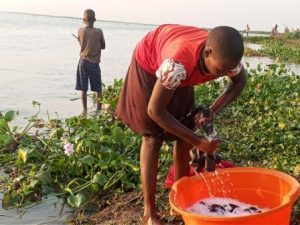
- WATER AND SANITATION
01.
Solar Water Disinfection at low-income households.
This technology allows low-income households to have access to safe drinking water at an affordable cost through the use of the UV rays of the sun to treat drinking water. The technology uses clear approved transparent PET bottles filled with water and placed under the sun for a minimum of 5-6 hours on a sunny day; during a cloudy day, place the bottles for the second day. It is easy, time saving and affordable to use and also has a positive impact on the environment. Solar Water Disinfection has been tested by the World Health Organization (WHO) and approved as an effective method for household water treatment.
02.
Gravity Driven Membrane system (GDM water kiosks)
The Gravity Driven Membrane water treats microbiologically polluted, turbid raw water in one step at a community distribution point. The core of the treatment system contains ultrafiltration membrane modules with a pore size (“holes”) of 20-40 nm. In contrast to the complex operation & maintenance (O&M) requirements of installations using membrane filtration in industrialized contexts, the GDM approach needs minimal operation & maintenance because the biological activity in the biofilm on the membranes prevents clogging leads to flux stabilization and therefore reduce the need for back-flushing and regular membrane disinfection.
03.
Rain Water Harvesting tanks
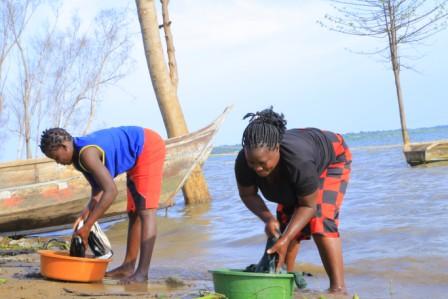
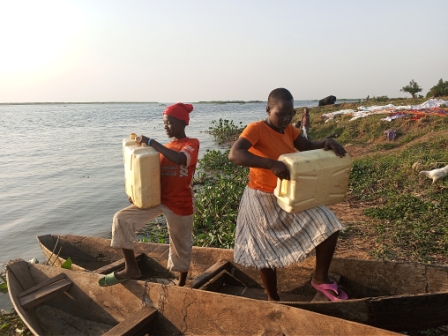
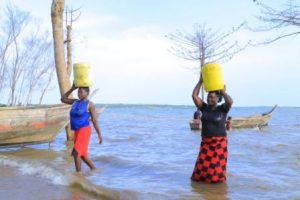
AWHI promotes rain water harvesting in households and schools as part of self-supply strategy to support vulnerable households and institutions that have distant access to water sources. The strategy is intended to create more learning for school children who would otherwise miss classes in search for water for school use as well avoid challenges involved along the way such as defilement cases, accidents of drowning in open water sources etc.
04.
Sanitation and Hygiene
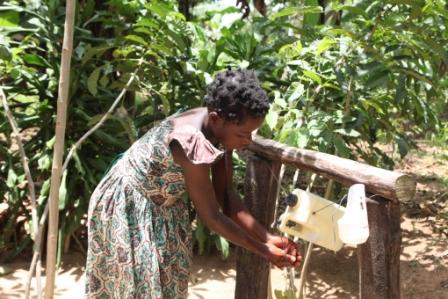
Africa Water and Health initiatives’ community-led total sanitation (CLTS) approach triggers the community to understand their own problems and come up with own solutions. In collaboration with the local government existing structures, community members are mobilized, triggered and trained on the importance of proper latrine usage, hand washing, waste management and installation of sanitation infrastructures aiming at achieving open defecation free villages.
05.
Menstrual Hygiene Management